Plasma Cutting Machine with Cable Drive
An efficient and reliable cable-driven plasma cutting machine, designed to operate in harsh conditions with minimal maintenance and high-precision metal processing
Our decision to design a new machine was prompted by problems with a previously purchased unit, built using a classical scheme with Hiwin rail guides and a rack-and-pinion drive. The machine operated for about two weeks before the carriages began to seize systematically.
In our workshop, where metal dust and debris are ubiquitous, this delicate mechanism could not maintain stable machining geometry. Frequent carriage jams caused operational deviations, which directly affected the quality and precision of finished parts.
We tried replacing the worn carriages and racks multiple times, but this did not solve the core problem. Dust and contaminants continually accumulated on the guides and drive components, leading to premature wear and frequent failures. Even the most powerful motors could not compensate, as the components simply could not withstand the harsh conditions.
Designing a Better Machine
Faced with these challenges, we decided to build an entirely different machine, featuring a simplified and more robust design.
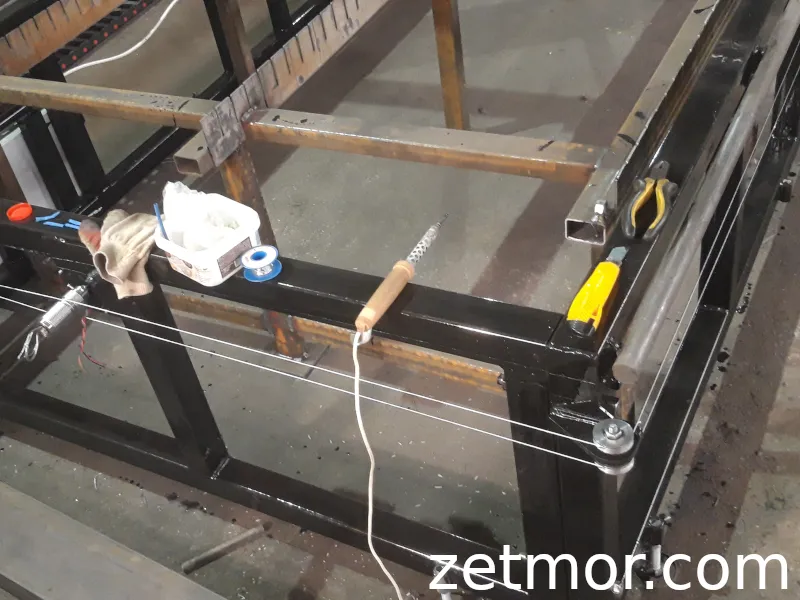
Instead of traditional rail guides, we used steel rods with rolling bearings, and the drive system was implemented using a steel cable. This design proved highly resistant to contamination and much easier to maintain — only standard ball bearings and the cable required occasional replacement.
After a year of operation, the new machine has experienced no carriage jams or wear issues, despite harsh working conditions and heavy metal dust. It maintains consistent machining accuracy, significantly improving product quality, while maintenance costs are almost negligible. Any mechanic can replace bearings or the cable without specialized tools.
Advantages
- Simple, cheap maintenance: Standard bearings are inexpensive and easy to replace, far more cost-effective than servicing rail carriages.
- Durable drive system: Cable drives eliminate the need for racks and gears, reducing wear and simplifying the design.
- Improved accuracy: The design avoids the skewing common in machines with motors mounted on both sides of the gantry.
Limitations
- Over time, rollers can accumulate dirt, causing the gantry to move unevenly at low speeds.
- Cable drives are impractical for machines longer than three meters.
Conclusion
After a year, my machine continues to operate flawlessly, while most modern CNC machines require constant attention. I later upgraded the “old” machine by designing new gantry stands with roller guides, eliminating the jamming issue entirely.
For anyone planning to build a CNC machine, this simple, reliable design is worth considering. And if building it yourself isn’t an option, such a machine can be custom-made — providing high-quality, low-maintenance equipment for any production environment.
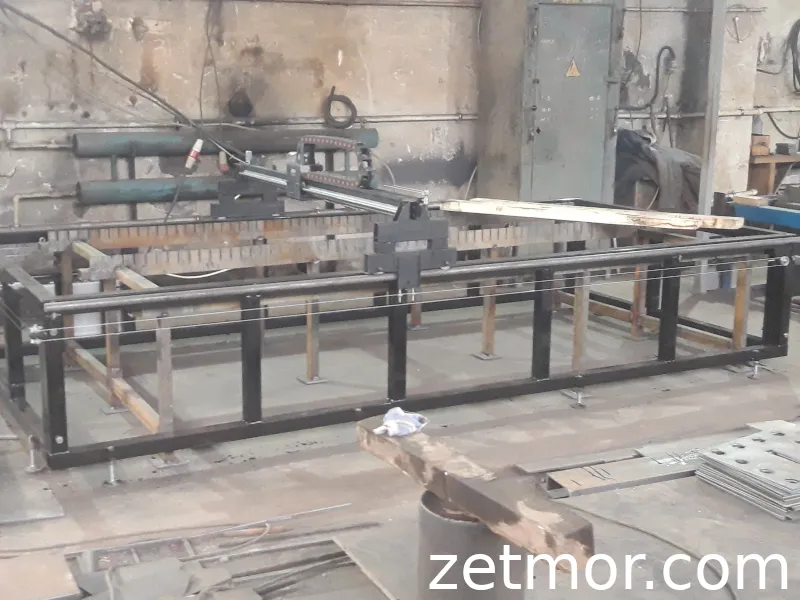
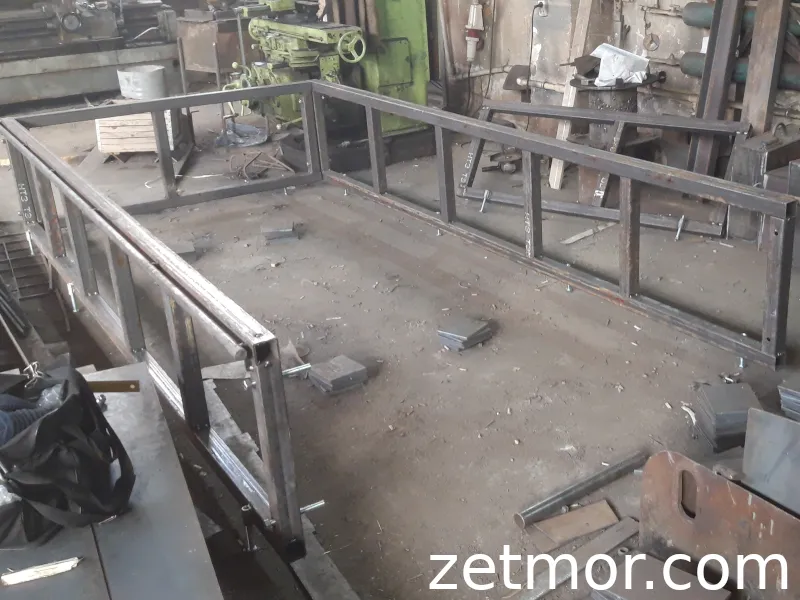
The machine consists of a frame in which a work table for placing metal sheets is installed. It was originally designed to cut metal thicker than 30 mm, which is one of the reasons for the expanded design of the frame and table.
Components for Construction
- Profiled steel tube
- Metal rods
- Cylindrical rail for the gantry
- Plasma cutting controller and height control system (THC) — the same system used on the “old” machine for interchangeability if needed
- Steel cable — approximately 15 meters
- Emergency Stop button with lock
- Toggle switch for enabling automatic torch height control
- Cables and wiring
- Control distribution box (ЩМП)
- 2 stepper motors
- 48 V pulse power supply
- 24 V pulse power supply
- 2 stepper motor drivers
- Junction box
- ZNI-2.5 terminal block
- 2 inductive sensors
- Set of fasteners (hardware)
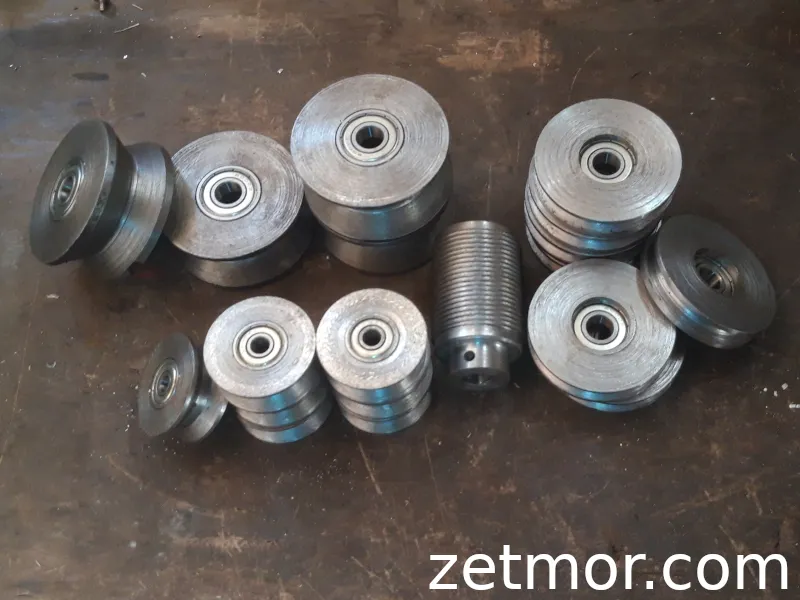
I manufactured the remaining parts for the machine: all components were cut on a laser, and the turner machined the rollers, tensioner shafts, and drums.
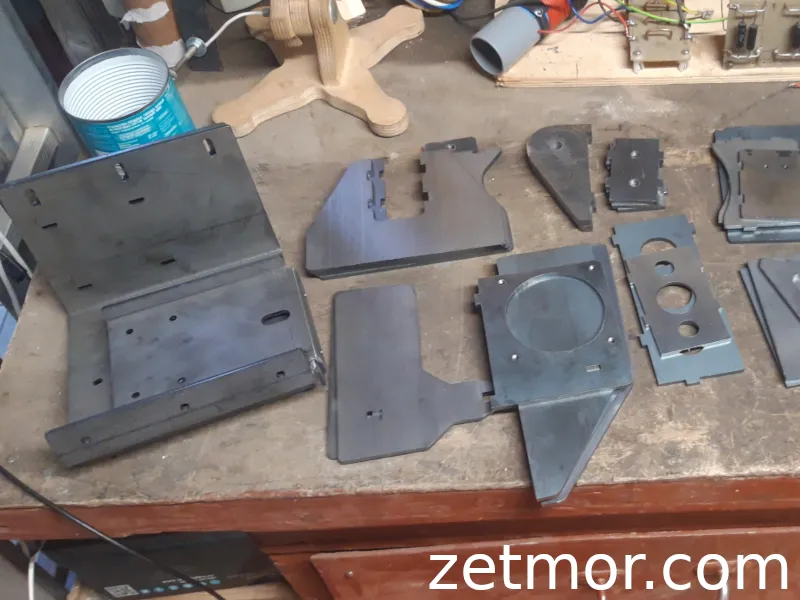
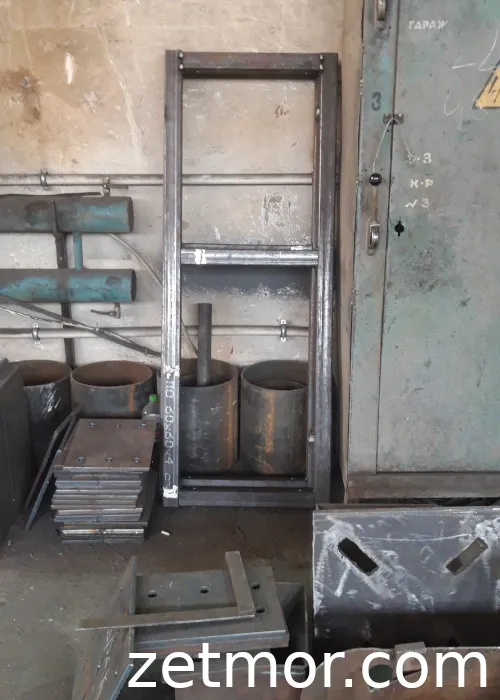
I cut the pipes, the vertical ones had to be faced on a lathe because the saw had altered the angle. After preparing all the metal parts, I assembled and welded the frame elements.
Frame
The frame consists of four rectangles that are bolted together to form the machine base.
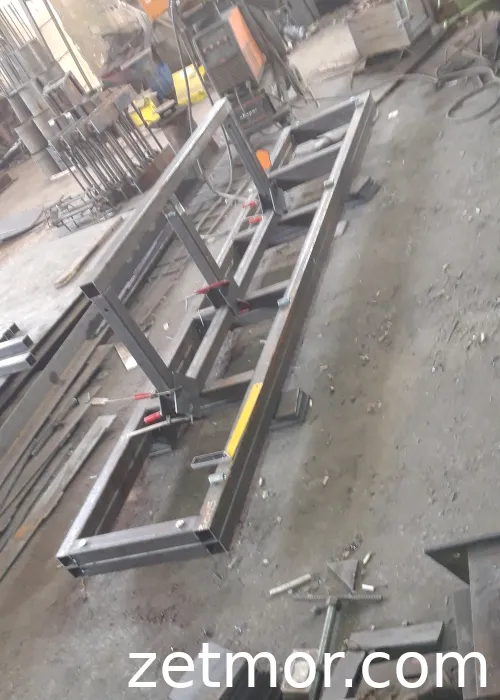
Once all the frame elements were ready, I assembled and installed the frame.
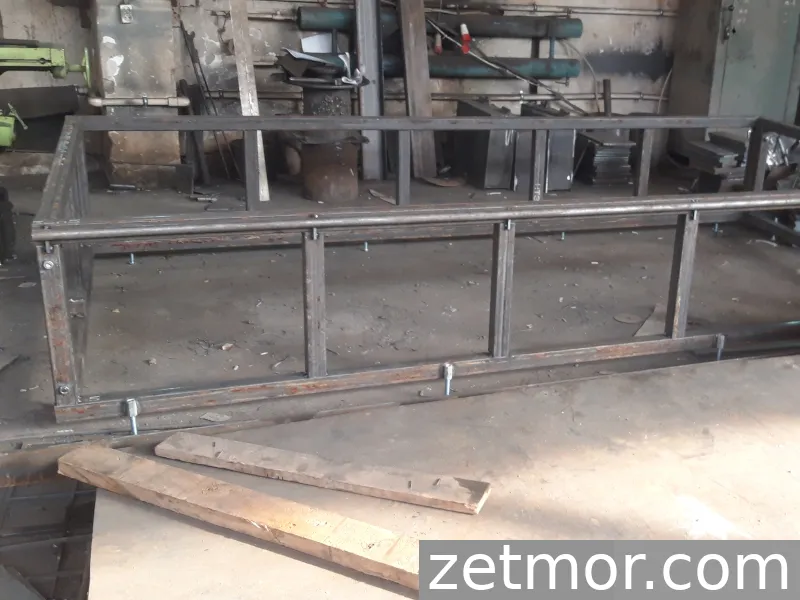
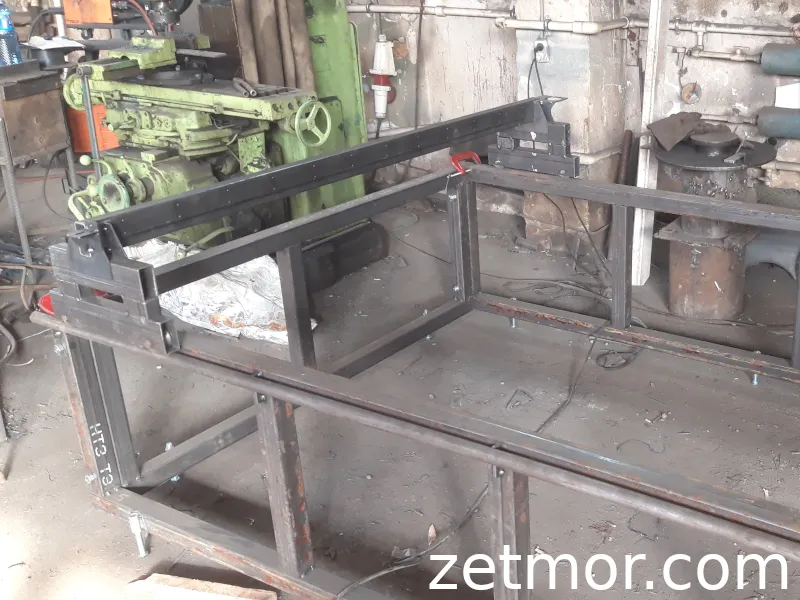
Gantry
The gantry is made from a single rectangular tube, and the gantry posts are cut from the remaining sections of this tube.
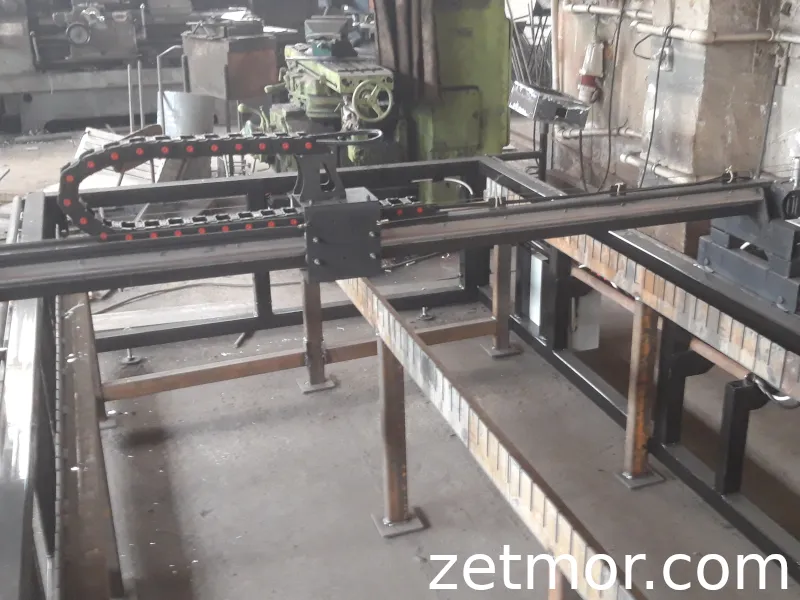
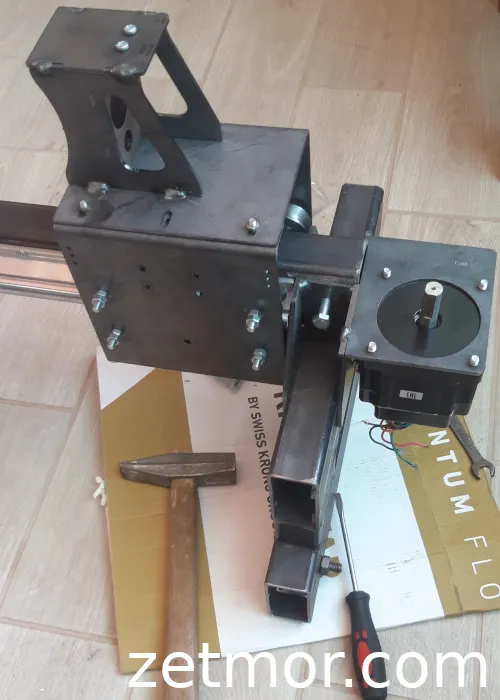
Gantry Carriage
It consists of two bent plates on which the rollers are mounted. The assembly is very straightforward.
Electronics
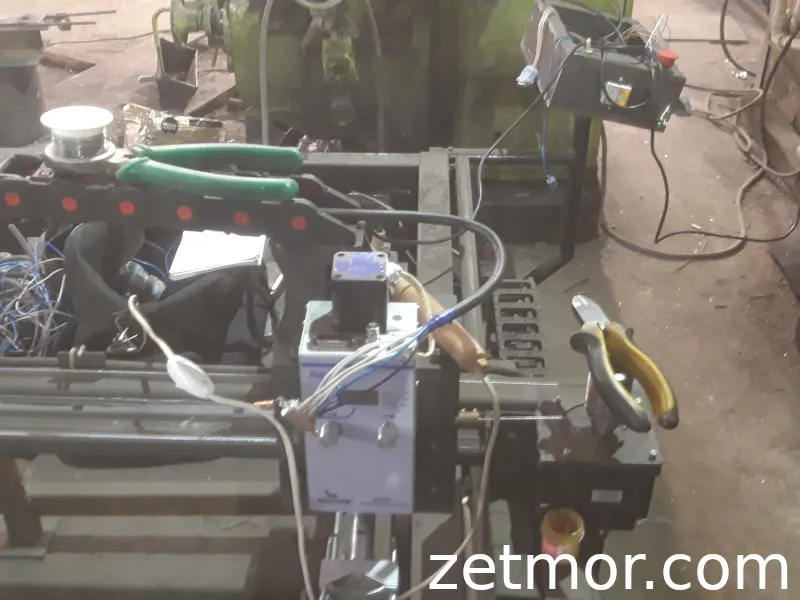
The electronics enclosure houses all the control components for the machine.
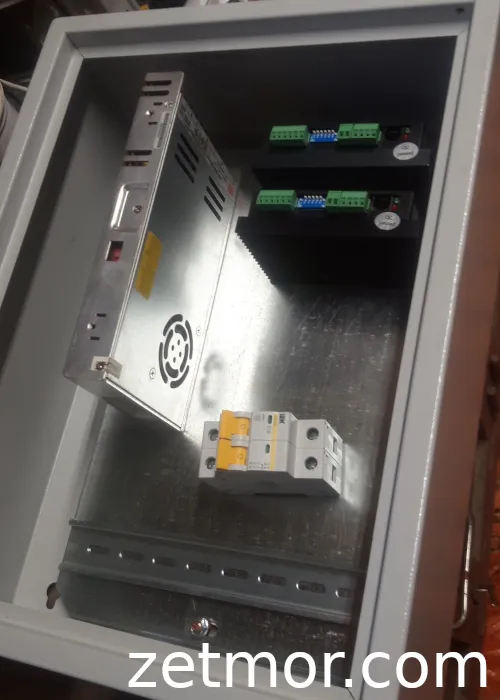
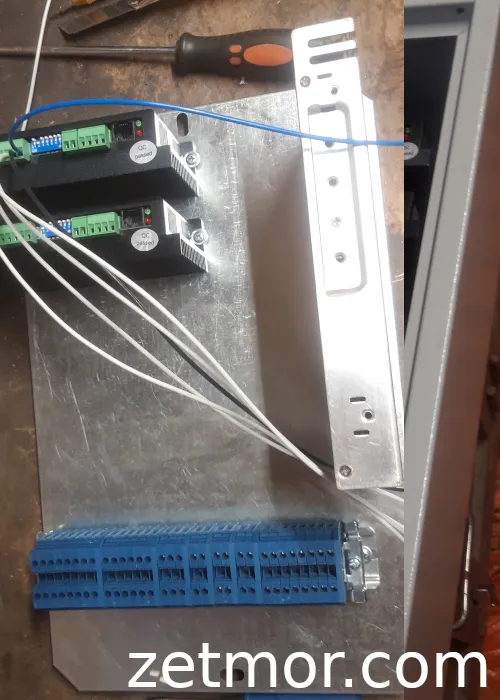
and the electronics of the entire machine


The rugged casing for the control panel is made from 4mm sheet metal, just like in the song ‘I made it from what I had.’
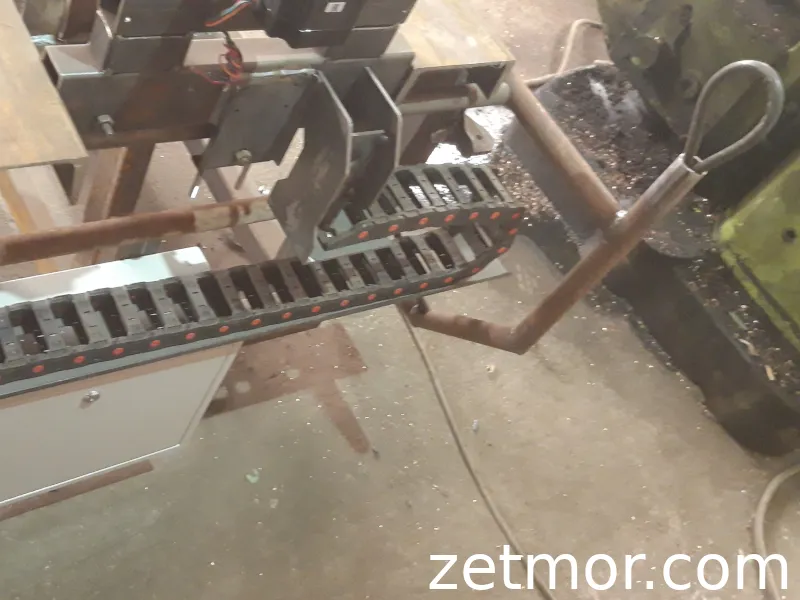

Images taken during the construction process