CNC Gas Cutting
Installation of a gas cutting system on a plasma cutting machine.
Gas-Oxygen Metal Cutting on a CNC Machine
After acquiring a CNC machine and a plasma source for cutting metal sheets, after some time, it became necessary to cut thick metal.
The solution was obvious: install oxygen cutting. Since I had never worked with gas before, this was new and, most importantly, interesting.
I studied oxygen cutting and the machine’s capabilities inside and out. I broke the entire work into stages.
1. Mechanical Design and Integration into the Existing Machine
As always, all work begins after determining the minimum requirements to solve the task.
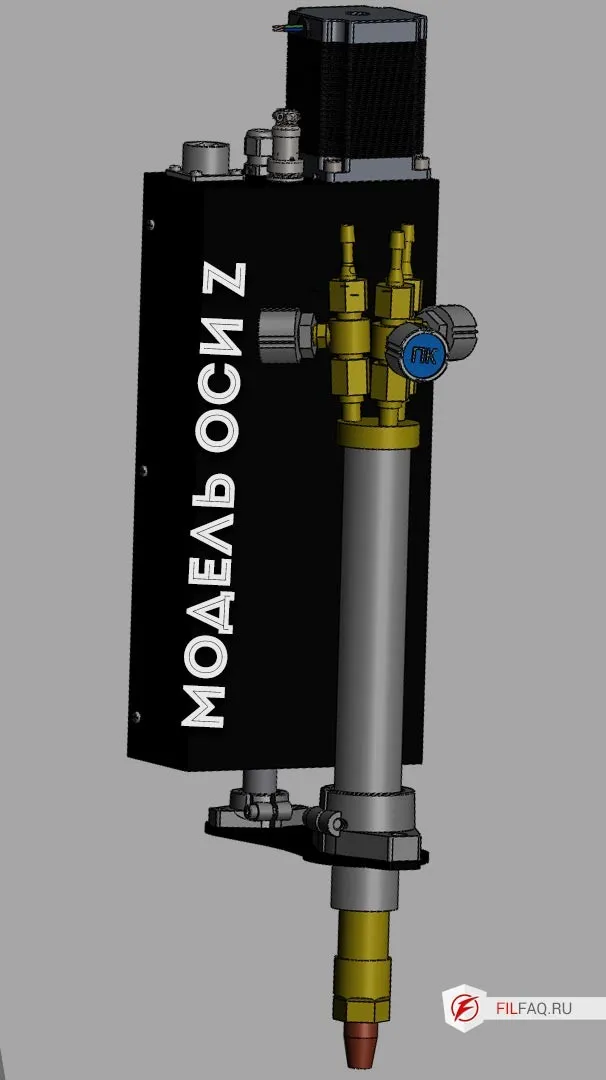
- We decide on the cutting principle — semi-automatic cutting, where the machine operator manually controls the gas torch. This minimizes the budget for implementing the gas cutting system while retaining all CNC machine capabilities, namely curved cutting of thick sheet metal using oxy-fuel cutting.
- Based on this, we select components for the mechanical part with minimal involvement of third parties. 90% of materials used are produced by many companies, which positively affects the product’s maintainability.
- The CNC system of the machine onto which the oxy-fuel cutting is integrated does not allow controlling an additional device. For control, I used an ATMEL controller, specifically an Arduino-based assembly. This controller generates a square wave signal that, when fed into the driver, rotates the motor in one direction or the other, lowering or raising the cutter. Since metal sheets aren’t perfectly shaped and may be warped, a potentiometer was installed to smoothly control the cutter’s movement by adjusting motor speed.
After designing the actuator:
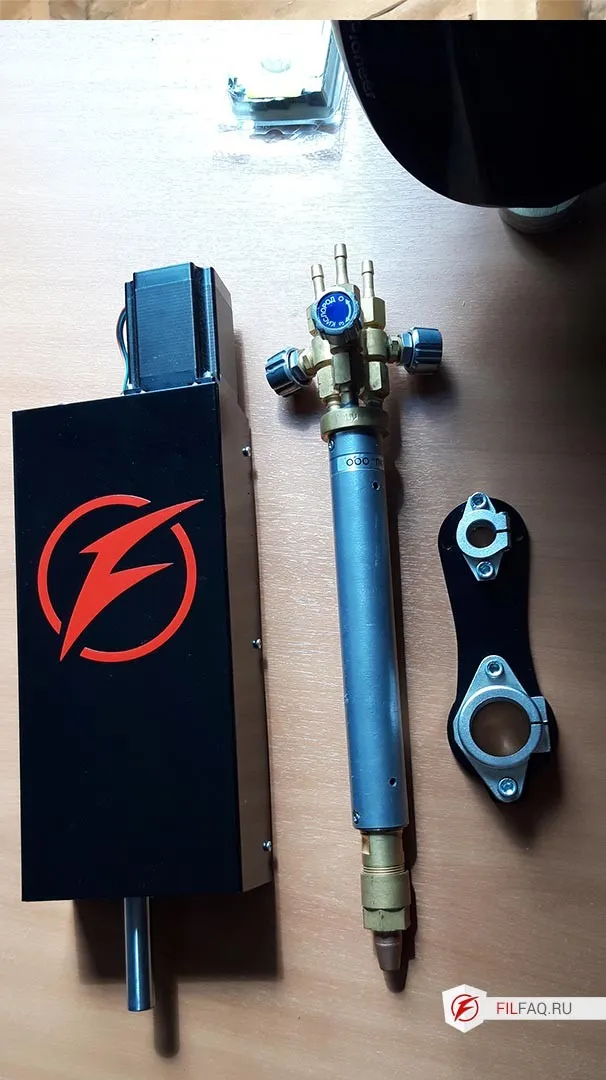
- 3D models were sent for cutting and bending, threads were cut on all actuator parts, then the structure was assembled and painted.
- The lead screw and two additional parts were machined on a lathe according to drawings.
2. Purchased Electrical Components and Fasteners
- Buttons, potentiometer, switch, controller.
- Stepper motor, stepper motor driver, power supply.
- Various wires by brand, gauge, and length.
- Connectors.
3. Acquisition and Installation of Gas Equipment
The following equipment was purchased:
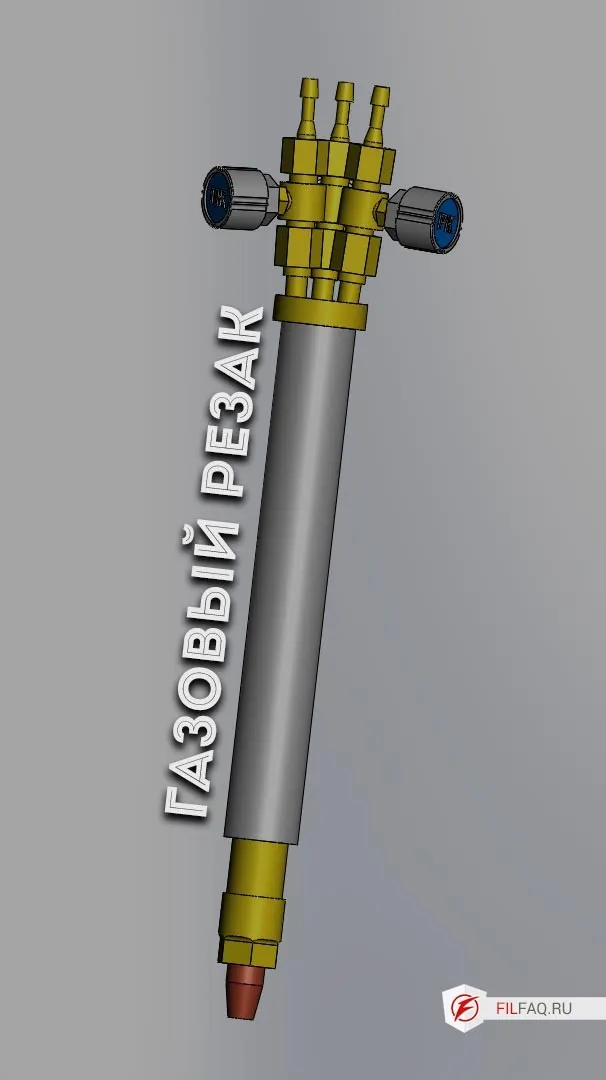
- Valve-type gas torch for automatic and semi-automatic oxy-fuel cutting of carbon and low-alloy steels up to 350 mm thick.
- Safety group including valves for oxygen and fuel gas.
- Solenoid valve with necessary DU size for cutting oxygen and 24V solenoid coil for valve control.
- Tee connector.
- Oxygen and propane regulators.
- Oxygen and propane cylinders.
- Gas hoses.
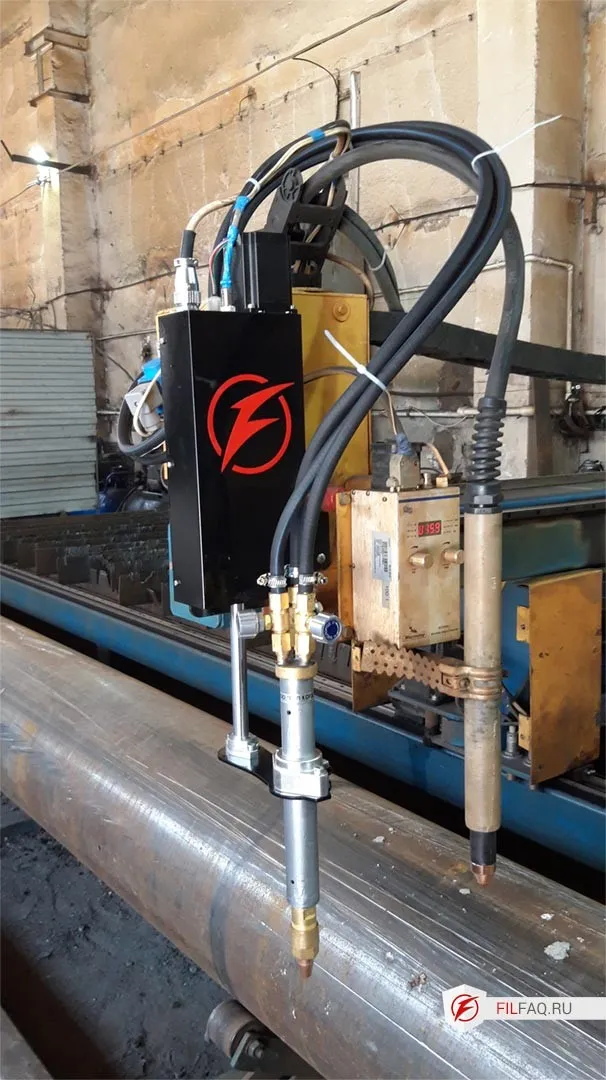
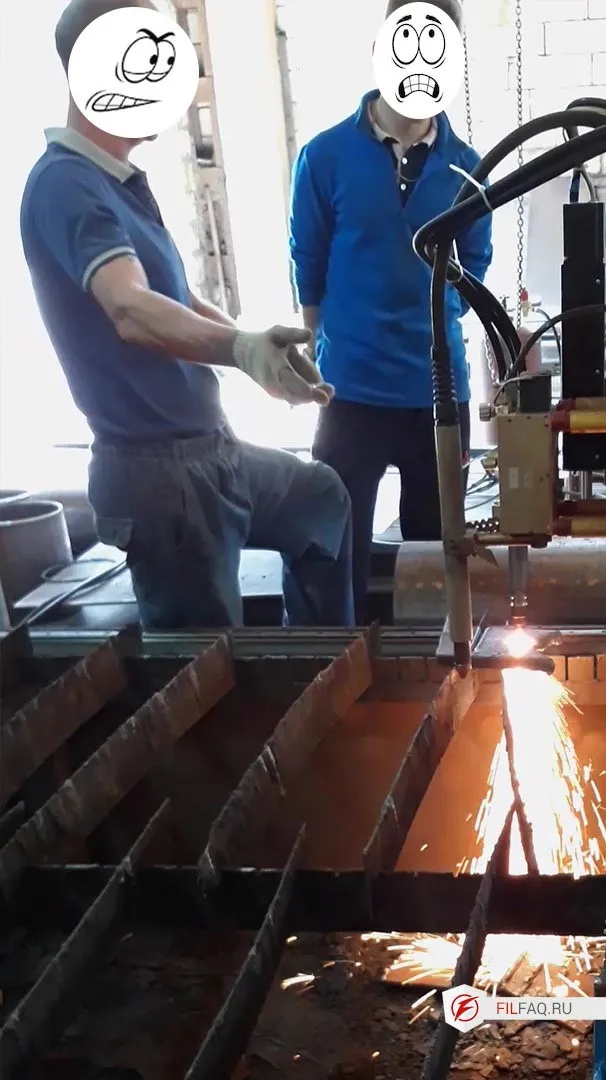
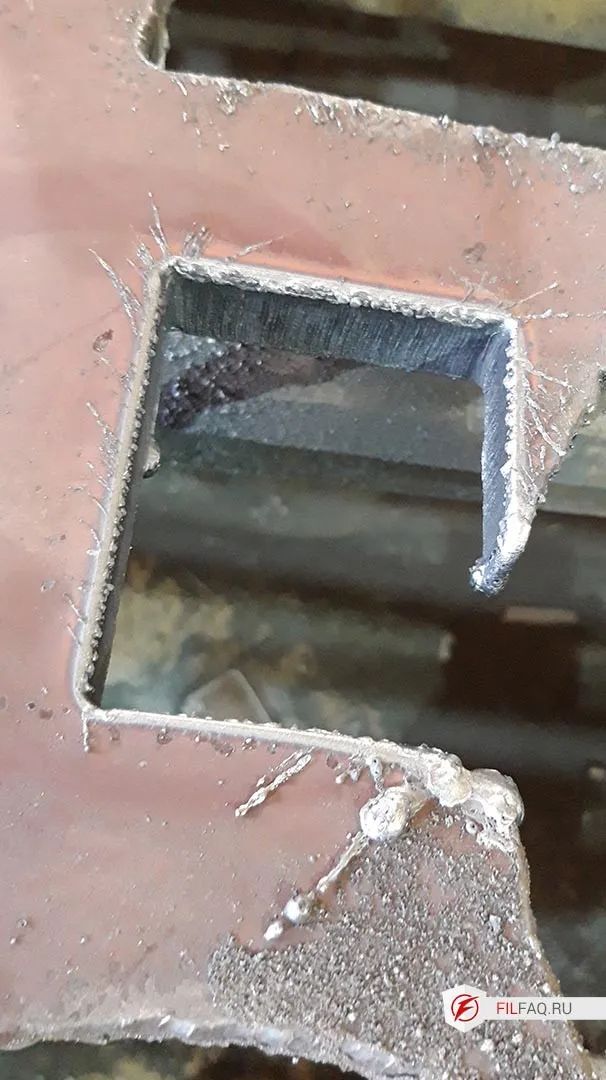
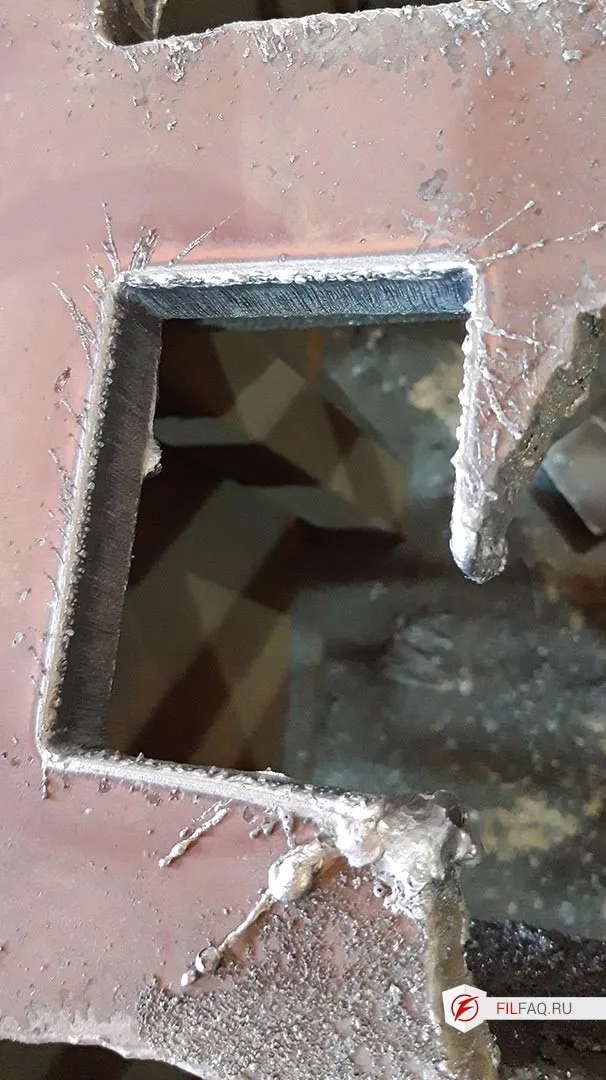
All this was done and tested cutting 20 mm steel; thicker sheets were not available.
Short Video
Oxygen Valve
The main challenge was selecting a valve for cutting oxygen. The valve must not only be compatible with oxygen but also allow a sufficient gas flow.
Insufficient DU causes lack of cutting oxygen.
I took an average oxygen consumption of 8 cubic meters per hour. Recalculated, it is about 133 liters per minute. Based on this, I selected the valve DU.
This simple approach solved the main problem of valve selection.
Oxygen Consumption for Metal Cutting is Calculated by the Formula:
R_det = H * L + H_kh
Where:
-
R_det – volume of oxygen needed for the cut, cubic meters.
-
H – oxygen consumption rate during operation, cubic meters per meter.
-
L — total cut length of the part, meters.
-
Kh — coefficient accounting for various features of the cutting process requiring gas consumption for:
-
Initial stage:
- Purging;
- Adjustment;
-
Heating the metal;
-
Cutting start process.
-
Kh is usually:
- 1.1 for one-off production;
- 1.05 for industrial (series) production.
The oxygen consumption rate “H” depends on equipment power and cutting mode. It is calculated as:
H = R / V
Where:
- H – oxygen consumption rate, cubic meters per meter.
- R — allowable gas consumption, cubic meters per hour (specified in equipment specs).
- V — cutting speed, meters per hour.